Finding the right freestanding wardrobe in the UK means cutting through a persistent myth: that your only real options are a bespoke fitted wardrobe at eye-watering cost, or a flat-pack box that never quite looks like furniture. Neither extreme tells the full story. A well-chosen freestanding wardrobe UK buyers can actually rely on, the right size, finish, and configuration, can hold its own against built-in storage, and in many bedrooms, it’s the smarter call altogether.
The UK freestanding wardrobe market has matured considerably. You’ll now find solid options from affordable pine and MDF designs through to premium oak and mirrored sliding wardrobes, with price points ranging from £250 to well over £1,200. The challenge isn’t finding something; it’s knowing what to look for before you spend anything.
What’s also changed is the delivery and assembly picture. Wardrobe House includes professional in-room assembly as standard with some products or an add on at checkout, meaning your wardrobe arrives and get built on the day, positioned where you want it, with no flat-pack experience required. That’s the benchmark worth holding the rest of the market against.
Freestanding vs. fitted: making the right call for your bedroom
This isn’t a debate with a universal winner. It’s a question of which option suits your situation. The honest version of this comparison starts with cost, and the gap is significant: fitted wardrobes typically start at £1,500 and escalate sharply once you add customisation, carpentry, and installation. A quality freestanding wardrobe sits between £250 and £1,200 depending on material and size. That gap narrows when assembly is included by the retailer, but it rarely closes entirely. For a practical comparison of the two approaches, see this fitted wardrobes vs freestanding guide.
Freestanding wardrobes win clearly in several common situations. Renters who can’t drill into walls or alter the fabric of a property get full storage without compromise. Buyers in standard-sized rooms without awkward alcoves or sloped ceilings get a result that looks just as intentional as built-in. Homeowners who want the flexibility to rearrange or take their furniture when they move benefit from a unit that isn’t fixed to the structure. Those who need storage now, rather than after a 6-week lead time and installation appointment, also come out ahead. The fitted route is worth considering mainly when your bedroom has sloped ceilings, deep alcoves, or genuinely awkward angles that a standard unit can’t accommodate. For most UK bedrooms, a well-specified freestanding wardrobe delivers equivalent function at a fraction of the cost.
Getting the size right for freestanding wardrobes in the UK
Wardrobe sizing in the UK follows a reasonably consistent set of dimensions, and understanding them before you browse saves a lot of wasted time. Single wardrobes run 60 to 90 cm wide, making them well suited to guest rooms, children’s rooms, or any wall where space is genuinely tight. Double wardrobes span 90 to 160 cm wide, the most common choice for individual or shared bedroom use, while triple wardrobes run from 150 to 250 cm wide and suit larger rooms or couples with significant storage between them. All three sizes typically run 180 to 220 cm tall and 55 to 65 cm deep, with 60 cm depth being the standard for hanging clothes without bunching or crushing. For a practical measurement checklist, see our wardrobe product size guide on product page.
The measurement task most buyers skip is the delivery path. Your new wardrobe has to travel from the delivery vehicle to its final position, and a typical UK home is full of pinch points along the way. Measure the width of your front door, the narrowest section of your hallway, any turn at the bottom or top of the stairs, and your bedroom door frame. Victorian and Edwardian terraced houses regularly catch buyers out at the staircase, where diagonal clearance at a turn can be far smaller than either the height or width measurement alone suggests. You can also download our expert fit guide for measuring tips and a delivery checklist.
For the room itself, allow a minimum of 70 cm of clearance in front of the wardrobe for the door swing on hinged models, and comfortable walking space regardless of door type. Measure wall width at floor level, mid-height, and ceiling height, then use the smallest figure. Floors in older UK properties are rarely perfectly level and walls aren’t always straight, so measuring at multiple points protects you from an expensive mismatch. For an additional reference on standard wardrobe dimensions, see this helpful breakdown.
Materials, finishes and door types: what you’re actually paying for
Wooden options: MDF with white or oak finish
Price variation in the freestanding wardrobe market reflects material choices more than anything else. MDF and chipboard units run from £140 to £800 and are the workhorses of modern bedroom furniture, they handle contemporary aesthetics well and offer a clean finish, though they’re less resilient under heavy use or in humid rooms. Pine sits in the £250 to £400 range: lighter, warmer in grain, and a practical entry point for buyers who want a natural wood feel without committing to premium cost. If you’re furnishing a rental or a room you’ll redecorate in a few years, pine or MDF is entirely reasonable. Solid or veneer oak starts at around £800 and runs well past £1,200, offering a longer lifespan, heavier build quality, and better long-term value for a room you plan to keep. See examples and options in this Hinged wardrobes collection.
Finish quality matters as much as the underlying material. Grey matt, white matt, and oak-effect finishes from mid-range retailers now sit close to premium bespoke options visually, particularly when the internal layout includes proper hanging space, shelving, and drawers. In 2026, warm neutrals, soft greys, and clean whites lead UK bedroom trends, with oak woodgrains holding strong for buyers who want warmth and texture.
Mirrored freestanding wardrobe considerations
On door type, the practical question is your room width. Sliding doors suit rooms under 3 metres wide where hinged doors would restrict movement or collide with a bed. The trade-off is that you can only access one section of the wardrobe at a time. Hinged doors give you full access at once and tend to suit larger rooms. Mirrored doors typically add £100 to £300 to the price but deliver genuine functional value in smaller rooms, bouncing light and removing the need for a separate full-length mirror. In compact UK bedrooms, that’s often a worthwhile addition.
What to check before you buy: build quality and assembly options
The things that separate a wardrobe that lasts from one that develops a wobble within a year are mostly invisible in product photography. Look for dovetail or cam-lock joinery at the base, metal drawer runners rather than plastic, adjustable shelving rather than fixed, and a stated weight capacity on the listing. A unit that feels solid when empty will amplify any structural weakness once loaded with clothing, shoes, and bedding. Ask retailers directly for frame material and thickness, the door finish is easy to photograph, but frame construction is what determines lifespan.
Anchor tall freestanding wardrobes to walls, particularly in homes with children. There are no mandatory UK requirements, but safety organisations including RoSPA and the Child Accident Prevention Trust recommend securing all tall freestanding furniture using metal L-brackets or manufacturer-supplied fixings. A 15-minute job with the right wall plugs for your wall type significantly reduces tip-over risk, especially for wardrobes over 180 cm tall. For evidence on why these measures matter, read this review of furniture anchors and tip-over risk.
Assembly and delivery are where the UK market splits sharply. Most retailers deliver flat-pack, leaving the entire build to you. Customer reviews consistently reflect the frustration this creates: unclear instructions, missing components, two-person jobs attempted alone, and the inevitable wobble from a slightly misaligned base. Wardrobe House takes a different approach: every order includes a specialist 1-to-2-person team who deliver and assemble the wardrobe in the room of your choice, remove all packaging, and leave you with a finished result rather than a cardboard mountain. For anyone who has spent a weekend wrestling with flat-pack furniture, that distinction is not a small one. For more hands-on advice and examples, visit our Wardrobe-house-blog-two.
Where to buy a freestanding wardrobe UK: 2026 options by budget
The market breaks into three clear bands. At the budget end, under £500, you’ll find the Argos Home Nordic two-door wardrobe in grey and pine at £250, a consistently well-reviewed option for guest rooms and rentals. B&Q’s MDF sliding range runs £300 to £650 and suits buyers who need a functional unit without a significant outlay. These are self-assembly products, and build quality and finish precision reflect the price accordingly.
In the mid-range, £500 to £1,000, the options improve considerably. Wayfair’s Creekbluff three-door sliding wardrobe at £789 earned a “best for storage” rating in 2026 expert testing. Harbour Lifestyle’s double and triple options run £749 to £1,250 and suit main bedrooms where appearance matters as much as function. At the premium end, Oak Furnitureland’s rustic solid oak double at £939 was named best overall in IndyBest’s 2026 testing, and the John Lewis Elstra mirrored range runs from £800 to over £1,400 for larger configurations.
Wardrobe House stands apart not because of price alone, but because of what’s included. Premium finishes across white matt, grey matt, black matt, and three oak options sit alongside professional in-room assembly as standard, free mainland UK delivery within 7 days, finance from £38 per month, and a 14-day money-back guarantee. For buyers who want a near-fitted result without the fitted wardrobe commitment, cost, or DIY variable, it’s a genuinely strong offer in the freestanding market. Find more inspiration and buying advice on our Blog, Wardrobe House.
The right wardrobe is a decision, not a guess
The filter points that matter most are straightforward: pick your size based on real measurements of both the room and the delivery route, match your material to your budget and how long you expect to live in the property, and treat delivery and assembly as part of the value equation rather than an afterthought. A wardrobe assembled badly in the wrong position costs more in frustration than any saving at point of purchase.
The UK freestanding wardrobe market in 2026 offers genuinely strong options at every price point. The difference between a wardrobe that looks like furniture and one that looks like storage usually comes down to finish quality, internal configuration, and how well it was put together. Both of those last two factors are within your control when you choose your retailer carefully.
If you want the full package without lifting a screwdriver, Wardrobe House is worth starting with. Professional assembly is included as standard, which most retailers at this price point charge separately for, if they offer it at all. Add free mainland UK delivery within a week, a choice of finishes that work in any bedroom, and a no-quibble return policy, and you have a buying experience that’s notably different from the flat-pack default.

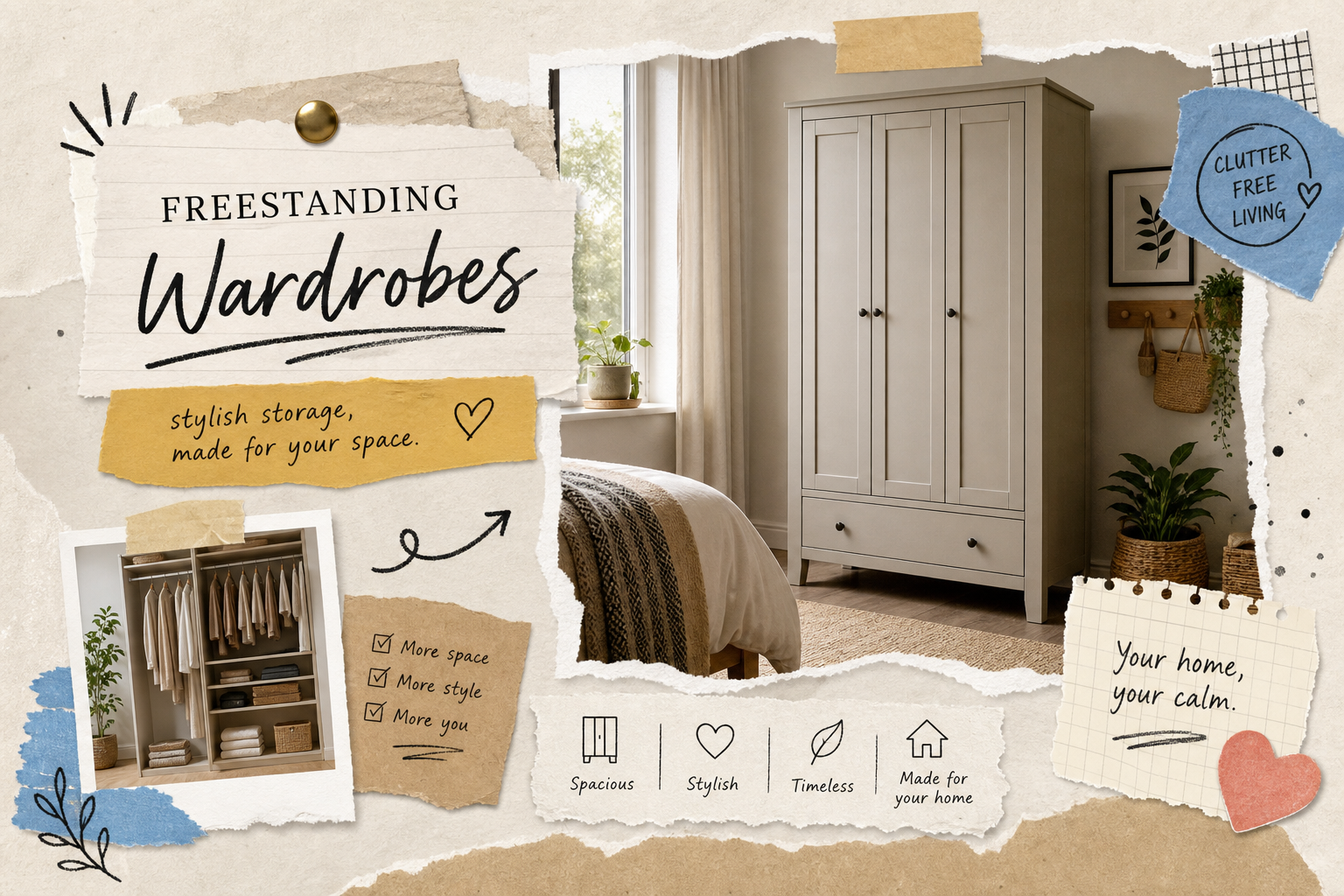 Finding the right freestanding wardrobe in the UK means cutting through a persistent myth: that your only real options are a bespoke fitted wardrobe at eye-watering cost, or a flat-pack box that never quite looks like furniture. Neither extreme tells the full story. A well-chosen freestanding wardrobe UK buyers can actually rely on, the right size, finish, and configuration, can hold its own against built-in storage, and in many bedrooms, it’s the smarter call altogether.
The UK freestanding wardrobe market has matured considerably. You’ll now find solid options from affordable pine and MDF designs through to premium oak and mirrored sliding wardrobes, with price points ranging from £250 to well over £1,200. The challenge isn’t finding something; it’s knowing what to look for before you spend anything.
What’s also changed is the delivery and assembly picture. Wardrobe House includes professional in-room assembly as standard with some products or an add on at checkout, meaning your wardrobe arrives and get built on the day, positioned where you want it, with no flat-pack experience required. That’s the benchmark worth holding the rest of the market against.
Finding the right freestanding wardrobe in the UK means cutting through a persistent myth: that your only real options are a bespoke fitted wardrobe at eye-watering cost, or a flat-pack box that never quite looks like furniture. Neither extreme tells the full story. A well-chosen freestanding wardrobe UK buyers can actually rely on, the right size, finish, and configuration, can hold its own against built-in storage, and in many bedrooms, it’s the smarter call altogether.
The UK freestanding wardrobe market has matured considerably. You’ll now find solid options from affordable pine and MDF designs through to premium oak and mirrored sliding wardrobes, with price points ranging from £250 to well over £1,200. The challenge isn’t finding something; it’s knowing what to look for before you spend anything.
What’s also changed is the delivery and assembly picture. Wardrobe House includes professional in-room assembly as standard with some products or an add on at checkout, meaning your wardrobe arrives and get built on the day, positioned where you want it, with no flat-pack experience required. That’s the benchmark worth holding the rest of the market against.